June 22, 2026
How Many Follow-Ups Does It Take to Close a Contractor Estimate? The Data Might Surprise You
# How Many Follow-Ups Does It Take to Close a Contractor Estimate? The Data Might Surprise You You sent the quote on Tuesday. It's now Friday. You haven't heard back. Do you follow up? When? What do
Last updated: June 2026
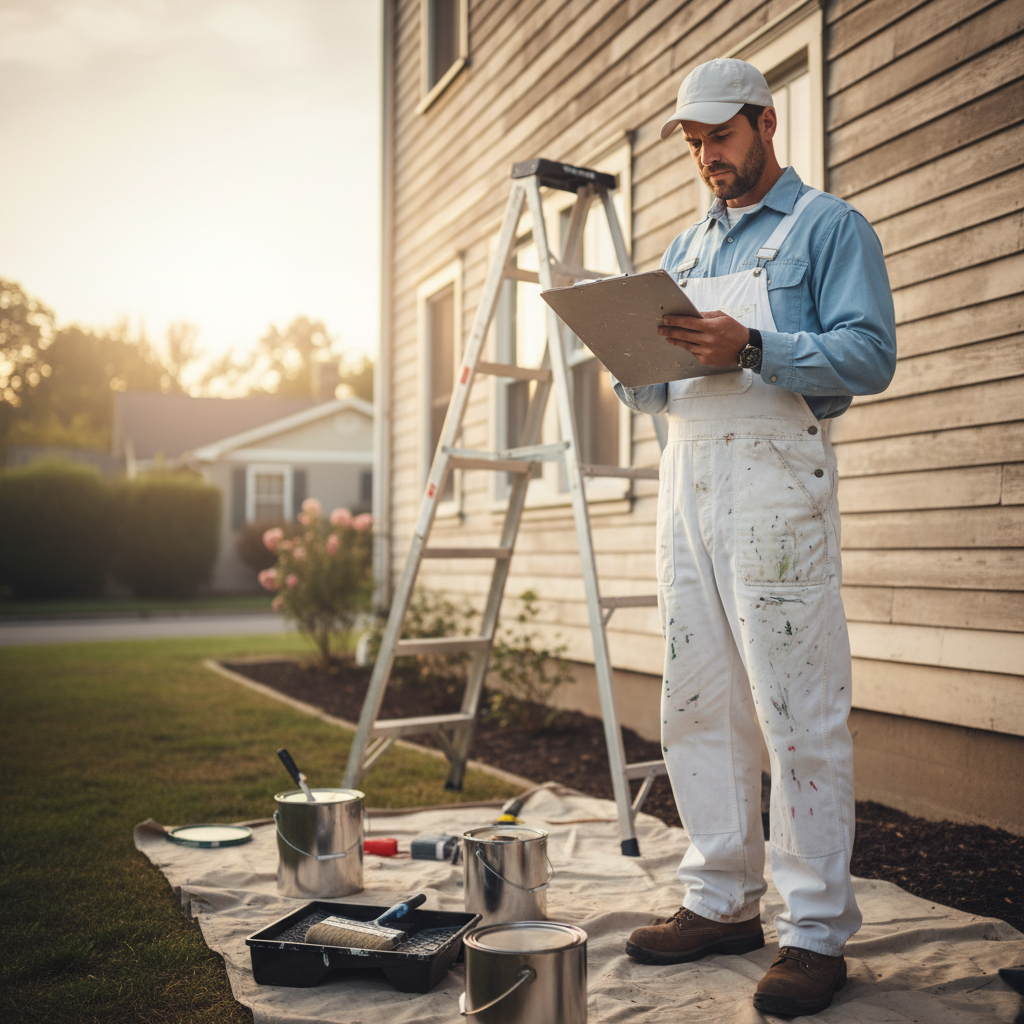
You sent the quote on Tuesday. It's now Friday. You haven't heard back.
Do you follow up? When? What do you say?
Most contractors guess. They follow up once — maybe twice — and then move on. The assumption is that silence means the homeowner chose someone else.
The data says otherwise.
The Follow-Up Gap Is Costing Contractors More Than They Think
Here's the uncomfortable truth: most homeowners who ghost a contractor estimate are not saying no. They're saying not yet.
They got busy. They had a family thing come up. They're waiting for their spouse to review it. They're comparison shopping slowly.
None of that is a hard no. All of it is a gap — the space between "quote sent" and "homeowner ready to decide" — and whoever fills that gap wins the job.
According to industry data on contractor close rates, the average contractor closes 20-30% of the estimates they send. Top performers close 50-70%. The primary differentiator isn't price. It isn't quality. It's follow-up speed and consistency.
What the Data Says About Contractor Follow-Up Cadence
The research on B2B and residential service sales is consistent: 80% of sales require at least five follow-up contacts after the initial quote, but 44% of salespeople give up after just one follow-up.
Contractors live this gap every week.
Studies tracking quote close rates by follow-up count show a pattern:
- Quotes that get zero follow-up: close at roughly 2%
- Quotes that get 1 follow-up: close at around 15-20%
- Quotes that get 3-5 follow-ups over 14 days: close at 40-50%
- Quotes that get automated multi-channel follow-up (email + SMS): close at 50-70%
The curve is steep early. Going from zero to one follow-up almost doubles your close rate. Going from one to three nearly doubles it again.
The problem is time. Following up manually on 20 open quotes is a part-time job. Most contractors don't have that time — so they guess at which ones to chase and let the rest go cold.
Why Homeowners Go Cold (And What That Means for Your Follow-Up)
Understanding why homeowners ghost helps you build a better follow-up cadence.
Reason 1: They forgot.
A homeowner who got three other quotes the same week as yours has a lot of email in their inbox. Your quote is real and they want to move forward — but it dropped below the fold. A simple reminder reconnects the thread.
Reason 2: They're waiting for someone else.
A spouse, a parent, a tenant — someone else needs to sign off. The homeowner is waiting for alignment before they reply to you. A follow-up is a nudge to have the conversation they've been delaying.
Reason 3: They're price-checking.
They received your quote, they're receiving one or two more, and they're comparing. Your follow-up keeps you in their field of vision. The contractor who stays present during the decision window often wins even when they're not the lowest price.
Reason 4: They have a question they never asked.
"Is that price for all materials and labor?" "Can you start in August?" "Do you take deposits?" They meant to ask when they first read the quote. They didn't. A follow-up gives them permission to reach back out.
None of these reasons mean the lead is dead. All of them mean the lead needs a push.
The 5-Touch Follow-Up Cadence That Closes More Contractor Estimates
Based on what works across residential home service businesses, here's the cadence that consistently outperforms single-touch or no-touch follow-up:
Touch 1 — Day 1 (Quote send day): Delivery confirmation
Send a brief text or email confirming the quote was sent and offering to answer questions. No pitch. No pressure. Just "your estimate just hit your inbox — let me know if you have questions about any of it."
This touch does two things: it confirms the quote was received (especially important for email, where spam filters are unpredictable), and it opens a dialogue without putting the homeowner on the spot.
Touch 2 — Day 3: Soft check-in
If no response on Day 1, send a brief follow-up: "Wanted to make sure the estimate came through clearly. Happy to walk you through it if helpful." At this point, the homeowner has had 72 hours to consider it. The soft check-in doesn't feel pushy — it feels helpful.
Touch 3 — Day 7: Value add or context
A week out, if still no response, add something to the conversation. A brief note about material lead times, a recent project completion in their neighborhood, or a note about your availability window. "Wanted to let you know we have a slot opening up the week of [date] if you're ready to move forward — just reply and I'll hold it."
Urgency works here, but only if it's real. Don't fabricate a deadline. A genuine availability constraint is more persuasive than a manufactured one.
Touch 4 — Day 14: Direct close attempt
Two weeks out, be direct: "Still available to move forward on your [project type] — just say the word and we can get you scheduled. If timing doesn't work right now, no problem at all — we can revisit when you're ready." This touch gives the homeowner an easy out (so they don't feel cornered) while also making a direct close attempt.
Touch 5 — Day 21-30: Long-tail re-engagement
For quotes that have gone completely cold, a 3-4 week follow-up makes sense for larger-ticket jobs. Keep it brief and low-pressure: "Circling back one last time — your estimate is still on file if the timing works. No rush." This is the touch most contractors never send — and it recovers a surprising number of jobs that would otherwise have been written off.
How to Follow Up Without Feeling Like You're Pestering
The fear most contractors have about following up multiple times is the same one their homeowners have about receiving it: it feels like pressure.
The key is cadence + context. One message every 3-7 days with a specific, relevant reason for following up (not just "checking in") doesn't feel like harassment. It feels like a professional who actually wants to do a good job.
Compare:
- ❌ "Hey, just checking in on that quote I sent."
- ✅ "Wanted to let you know I have availability the week of June 30th for your project — wanted to flag it before it fills up."
The second message gives the homeowner a reason to respond that isn't just "because I want your money." It respects their time and adds value to the conversation.
What Automated Follow-Up Actually Looks Like for Contractors
Doing all of this manually — tracking 20-30 open quotes, knowing which one is on day 3 versus day 14, writing a fresh message for each one — is the reason most contractors give up after one follow-up.
Automated quote follow-up solves this by turning the cadence into a system instead of a task.
With a tool like QuoteFollow, the sequence looks like this:
- You send (or log) a quote
- An automated email and SMS go out that same day
- Follow-up #2 fires automatically on Day 3 — you don't schedule it
- Follow-up #3 fires on Day 7 — you don't write it
- The homeowner responds — the chase stops
- The homeowner doesn't respond — follow-ups continue through your defined window
You stay on the tools. The follow-up runs itself.
When the homeowner replies on Day 14 because the fifth follow-up finally caught them at the right moment — that's a job you would have lost if the follow-up had been on you to remember.
How Many Follow-Ups Is Too Many?
The honest answer: it depends on the job size and the homeowner's engagement signals.
For a $2,000 gutter replacement, a 3-touch cadence over 10 days is probably enough. For a $40,000 roof replacement, a 5-touch cadence over 30 days is justified — the homeowner's decision process is longer, and the stakes of losing the job are higher.
Watch for engagement signals: if a homeowner is opening your emails multiple times (a modern CRM or follow-up tool can show you this), they're interested but not ready. Continue the cadence. If they explicitly say "we've decided to go another direction," stop immediately — and ask if you can follow up if they want a second opinion in the future.
The one thing to avoid: single-touch and done. One "just checking in" message three days after the quote is better than nothing, but it leaves most of the value on the table.
We Chase. You Build.
The contractors who close 60%+ of their estimates aren't doing anything fundamentally different in the field. Their roofing is the same quality. Their HVAC installs are the same. Their prices are in the same range.
What's different is their follow-up.
They chase every quote on a schedule. They never let a lead go cold because they forgot to follow up on day 7. They recover jobs on day 21 that most contractors have already written off.
Some do it manually, with a spreadsheet and discipline. Most do it with automated follow-up tools that run the cadence for them.
Either way: the contractors who chase, close. The contractors who wait, lose.
The question isn't whether to follow up. It's how many times — and the data says: more than you think.
QuoteFollow is automated quote and invoice follow-up for contractors. Flat $79/month, unlimited users, 14-day free trial. We chase. You build.
Stop losing jobs to silence.
QuoteFollow handles every follow-up automatically, so you close more jobs without lifting a finger.
Start your 14-day trial