April 14, 2026
HVAC Contractor Follow-Up: How to Book More Jobs from Your Estimates
The average homeowner gets three HVAC quotes and books nobody for two weeks. Then it hits 95 degrees, the AC dies completely, and they call whoever they can reach first — not whoever gave the best price. HVAC jobs followed up within 72 hours book at roughly 2.4x the rate of uncontacted estimates (Service Titan Industry Report, 2024). If you're not following up, that first call is not going to you.
Last updated: April 2026
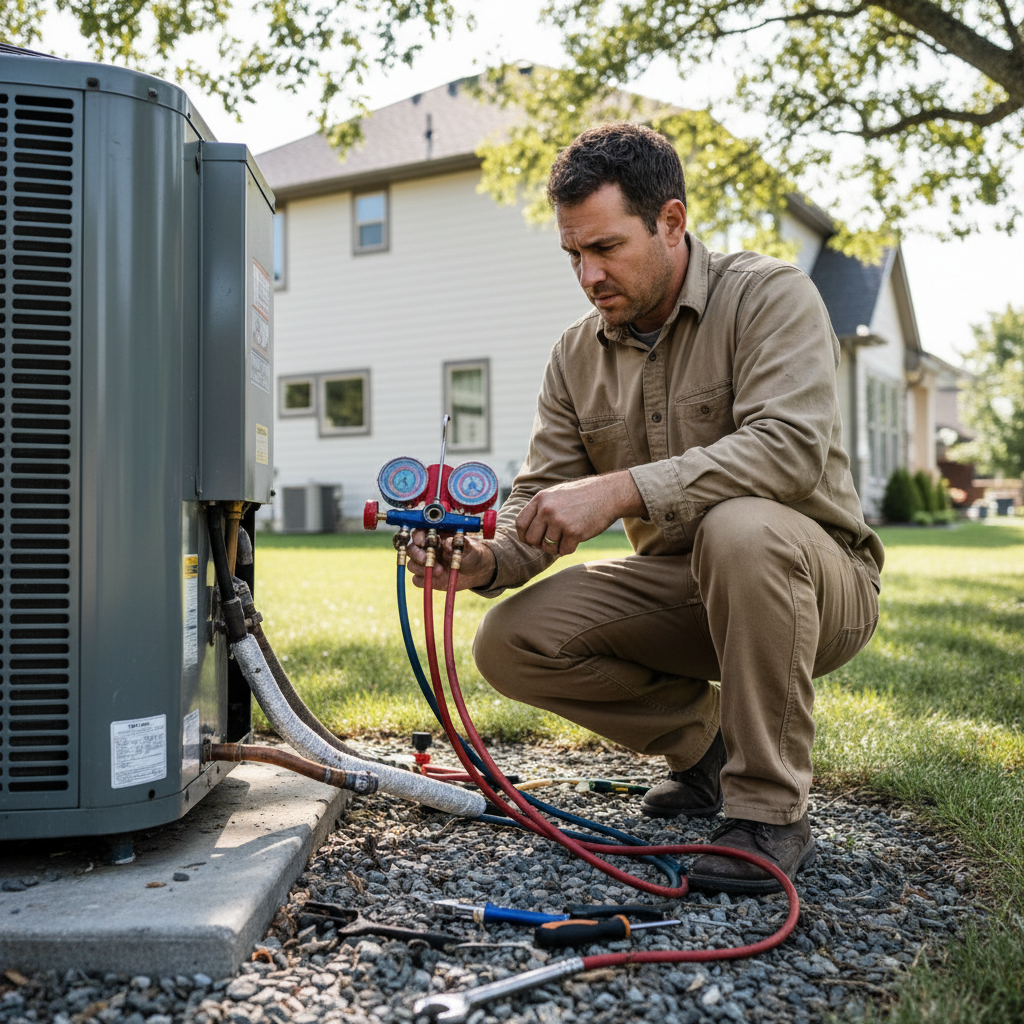
HVAC has something most trades don't: a built-in deadline. Heat waves, cold snaps, and shoulder-season windows all create real urgency that the homeowner feels whether or not they admit it in the appointment. Your follow-up messages can tap into that urgency without manufacturing fake pressure. You're just connecting the dots for them.
Most HVAC contractors do one follow-up call, get voicemail, and move on. That's why the contractors who follow up consistently — even just with texts — clean up. Here's how to build a sequence that books more jobs from the estimates you're already running.
Why HVAC follow-up timing is different from other trades
In roofing or remodeling, a homeowner can delay a decision for months without real consequences. In HVAC, delay costs them comfort — and sometimes health. An AC system limping along in June might fail completely in August. A furnace that "still works" in October might leave the family without heat in January.
That time pressure is your follow-up advantage. When you reach back out on day 5 with a message that mentions "with temperatures rising this week, wanted to make sure you're covered before our schedule fills up," you're not being pushy — you're being genuinely helpful. A homeowner who hears that message and has a failing system will respond. One who doesn't hear it will just wait until the system dies.
What to say and when: a 4-touch HVAC sequence
Here's a cadence built specifically for HVAC. The key is that each message has a reason to exist beyond "just checking in."
- Day 1:Confirm the estimate arrived and offer to answer questions. Keep it under 3 sentences. You're just making sure the line is open.
- Day 3:Reference the weather or the season. "Wanted to follow up on your estimate before our schedule books up this week — we're seeing a lot of calls with the heat coming. Happy to hold a spot if you're ready to move forward."
- Day 7:Add a technical point. If they're replacing an old unit, mention the efficiency savings. "A 20-year-old unit running at 10 SEER costs roughly double to operate compared to a new 18 SEER system. On a typical home your size, you'd recover most of the cost difference in 4-5 years just in utility savings."
- Day 14:Light final check-in. "Still have an opening this week if you want to get this scheduled before the weather shifts. No pressure — just wanted to make sure you hadn't lost my info."
A real follow-up text that gets responses
Here's an example of a day-3 HVAC text that consistently gets replies:
"Hi [Name], this is [Your Name] from [Company] — sent your estimate for the AC replacement a few days ago. With temps climbing this week, wanted to check in before our install slots fill up. Any questions on the quote? Happy to hop on a call."
It's 50 words. It's not salesy. It references something real — the weather, your schedule — and gives them an easy out (just ask a question). Homeowners respond to this because it doesn't feel like a pitch. It feels like a contractor who actually cares whether they have working AC.
Why text beats phone for busy homeowners
Most HVAC customers are working adults. They can't take a phone call in the middle of the workday, and they don't call back numbers they don't recognize. But they'll read and respond to a text within the hour. Text open rates run around 98% (Gartner, 2024). Phone calls to mobile numbers go to voicemail more than 70% of the time (Hiya State of the Call Report, 2023).
This doesn't mean never call — if someone responds to your text and asks for a call, that's a warm lead and you should pick up fast. But the first outreach, and the follow-up cadence, should be text-first. You'll get more responses, fewer awkward voicemails, and a cleaner record of who said what.
Handling "we're still comparing quotes"
This is the most common reply you'll get from prospects who do respond. The wrong answer is "okay, let me know." The right answer acknowledges the process and adds one piece of value: "That's smart — definitely get a few quotes on a job this size. One thing to ask whoever else comes out: make sure the load calculation is done properly and not just based on square footage. A lot of contractors upsize units to close jobs fast, and an oversized unit actually costs you more and has more humidity problems."
Now you've given them a question to ask your competitor, which makes you look like the expert and puts the other contractor on the defensive. You don't have to trash anyone — just educate. It's one of the most effective follow-up moves in HVAC sales.
What not following up actually costs you
The average HVAC replacement job in 2026 runs $8,500 to $14,000 for a full system. If you're sending 30 estimates a month and closing 35% of them without follow-up, you're booking about 10-11 jobs. Bump that to a 55% close rate with a consistent follow-up system and you're booking 16-17 jobs from the same lead volume. That's 5-6 additional jobs a month — call it $50,000 to $70,000 in added revenue — from estimates you were already running.
The leads aren't the problem. The follow-up is. Every estimate you send without a follow-up sequence attached to it is money you paid to generate that lead walking out the door.
Frequently asked questions
How soon should an HVAC contractor follow up after sending an estimate?
Within 24 hours. The first message should go out the same day or next morning. HVAC jobs followed up within 72 hours book at roughly 2.4x the rate of those with no follow-up. Speed matters more in HVAC than most trades because weather urgency is real.
How do you create urgency in HVAC follow-up without being pushy?
Use real urgency — the weather forecast, your actual schedule, the efficiency cost of running an old unit. Don't manufacture fake deadlines. If it's July and their AC is failing, that urgency already exists. Your message just needs to surface it.
What's the best channel for HVAC follow-up: text, email, or phone?
Text first for every touchpoint except when you need to share detailed specs — then use email. Cold calls to mobile numbers go to voicemail over 70% of the time. Texts get read. Save the call for when a prospect asks for one.
How many follow-ups should an HVAC contractor send before giving up?
Four touchpoints over 14 days is the right range for most HVAC jobs. After day 14, decision fatigue sets in and the homeowner has likely either moved forward or gone cold. A clean final message — no pressure, just closing the loop — often gets a response when nothing else did.
Stop Losing Jobs to Silence
QuoteFollow automatically follows up with every prospect after your quote — by email and text. $79/month, 14-day free trial.
Start free trialKeep reading
Related guides
Speed to Lead: Why First Contractor to Reply Wins (78%)
78% of customers hire the first company to respond. Here's the data, why contractors are structurally slow, and how to fix it even when you're on the job.
Templates5 Quote Follow-Up Templates That Get Replies (Copy+Paste)
Copy-paste text and email templates for Day 2 through Day 21 after sending a quote. Each one is explained so you know why it works.
Follow-UpHow Many Follow-Ups After a Quote? (Data Says 5)
80% of sales close after 5+ touches. 44% of contractors give up after one. Here's the exact cadence that maximizes conversions without being annoying.
Stop losing quotes to silence.
QuoteFollow chases every quote and invoice automatically — flat $79/mo, SMS included.
Start free trial →