April 10, 2026
Why Contractors Don't Follow Up (And What It's Actually Costing Them)
Most contractors don't follow up because they're too busy on the tools, assume silence means no, and have no system in place to make it happen. Those three things together are costing the average contractor tens of thousands of dollars a year in jobs that were there for the taking.
Last updated: April 2026
Across home service contracting, the average quote-to-close rate sits around 25-35% (Hatch, 2023). For every ten estimates you send, you're losing six to eight jobs. Some of those losses are legitimate: wrong fit, wrong price, they went with a friend. But a significant chunk are lost simply because no one followed up.
Here are the five real reasons this happens.
1. They're too busy on the tools
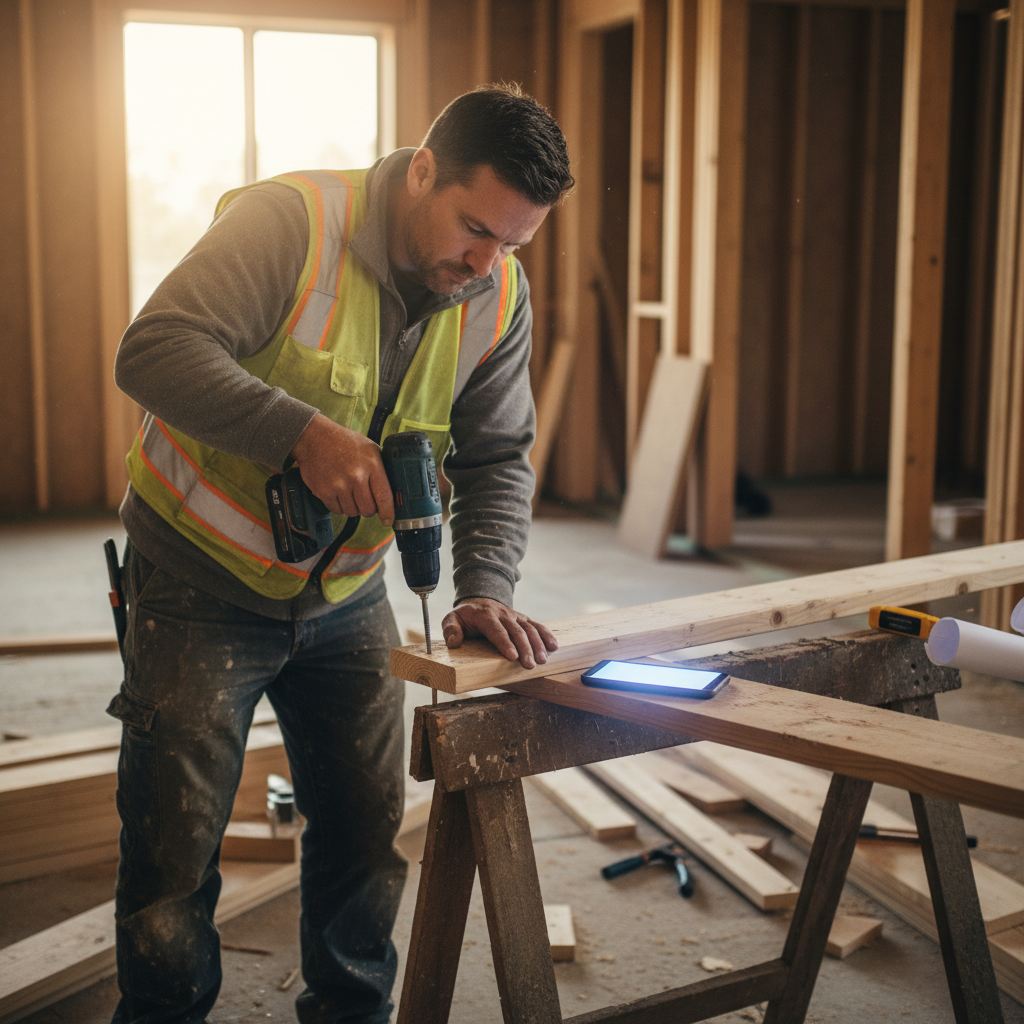
This is the most common and most legitimate reason. You've got a crew to manage, materials to source, a customer on-site asking questions, and a punch list from yesterday's job. Following up on a prospect who may not even close is the lowest priority item on a very long list.
The problem isn't the busyness. The problem is treating follow-up as a task that requires your active attention. When it's a manual process — remember to call, remember to text, remember to email — it competes with every other fire you're dealing with. And it loses, consistently.
The fix isn't becoming less busy. It's removing follow-up from the list of things you have to actively manage.
2. They assume silence means no
Most contractors interpret a non-response as a rejection. "If they were interested, they'd call me back." This feels logical, but it's wrong.
Research on consumer behavior consistently shows that most non-responses aren't rejections — they're delays. The homeowner got busy. They got distracted. They need to talk to their spouse and keep forgetting. They're comparing three quotes and haven't finished. They intended to reply and then it fell out of their head.
57% of prospects who eventually purchased said they needed to be contacted more than once before they made a decision (Marketing Donut, 2023). Silence is not a no. It's usually just noise.
3. They don't want to seem desperate
There's a real psychological barrier here. Following up multiple times feels like begging for work. Like you need the job more than they need the project done. Especially for contractors who have strong reputations and plenty of referrals, following up can feel beneath them.
This is worth examining, because the feeling is understandable but the logic is backwards. Following up isn't desperation. It's professionalism. Every good business follows up. Lawyers follow up. Financial advisors follow up. Real estate agents follow up. It signals you're organized and that you take the client relationship seriously.
What actually comes across as desperate: sending the same message three times in 24 hours, offering to lower your price in the first follow-up, or using language like "I really hope we get a chance to work together." A consistent, spaced, professional sequence doesn't read as desperate. It reads as capable.
4. They have no system, so it just doesn't happen
This is the most fixable reason on the list, and probably the most common cause of lost revenue.
When follow-up lives in your head, it depends on you remembering it at the right time, in the right context, when you're not in the middle of something else. That's a terrible system. It will fail, consistently, without any malice or laziness on your part. It fails because memory is not a reliable business process.
When there's no CRM reminder, no automated sequence, no calendar event — the follow-up just doesn't happen. Not because you're bad at your job. Because there's no system to make it happen.
5. They think the prospect will call them
"I sent the estimate. Ball's in their court." This logic feels fair. You did your part. If they want the job done, they'll reach out.
Except homeowners are bad at initiating. They're not in sales mode. They got three quotes, they're confused about the differences, they haven't had the energy to sit down and compare them, and the path of least resistance is to do nothing. Inertia is the real competitor.
The contractor who follows up isn't just reminding them — they're actively reducing the friction of saying yes. A simple "Any questions?" message gives them an easy on-ramp back into the conversation. Without it, they have to manufacture the motivation to call you from scratch.
What this is actually costing you
Let's run the math with a simple example.
Say you send 20 quotes per month at an average project value of $8,000. At a 30% close rate, you're closing 6 jobs — $48,000 in revenue from that quote volume.
Now add a consistent follow-up system. Industry data on home service contractors who implement structured follow-up sequences shows close rate improvements of 8-15 percentage points on average (Hatch, 2023). Even at the low end, pushing your close rate from 30% to 38% means closing 7.6 jobs instead of 6 — call it 7 to 8 per month.
At 8 closes instead of 6: $64,000 from the same 20 quotes. That's $16,000 more per month in revenue from the exact same lead volume, with no additional marketing spend.
Annualized, that's $192,000 in additional revenue. From follow-up.
Most contractors are leaving money this size on the table every single month — not because they're bad at their trade, but because they never built the system.
The solution: build a system, not a habit
Habits fail when life gets in the way. Systems keep running regardless.
The options:
- Manual with calendar reminders: Set a recurring reminder for each quote at Day 1, 3, 7, 14, and 21. Works if you're disciplined. Fails when you're slammed.
- CRM with follow-up sequences: Tools like HubSpot or a contractor CRM can automate this, but they require setup time and ongoing management. Good if you're already using one.
- Dedicated follow-up automation: Tools built specifically for this — like QuoteFollow — connect to your estimate workflow and run the sequence automatically. You send the quote, the follow-up handles itself.
The specific tool matters less than the commitment to having any system at all. Pick one that fits how you work and that you'll actually use consistently. Then stick with it.
The contractors closing at 40-50% aren't better at their trade than the ones closing at 25%. They're better at staying in front of people until a decision gets made.
Frequently asked questions
Why don't most contractors follow up after sending a quote?
The main reasons are being too busy on active jobs, assuming silence means no, and having no system to make follow-up happen automatically. It's rarely laziness. It's that follow-up competes with everything else and loses without a process behind it.
How much revenue are contractors losing by not following up?
A contractor sending 20 quotes per month at $8,000 average job value could add $16,000 per month — roughly $192,000 per year — by improving their close rate by just 8 percentage points through consistent follow-up. The math depends on your numbers, but the impact is nearly always significant.
Does following up make a contractor look desperate?
No. A spaced, professional sequence reads as organized and attentive. What looks desperate is following up repeatedly in the same day or offering to lower your price unprompted. A 5-touch sequence over 21 days is standard practice in most service industries.
What's the best way for contractors to automate follow-up on quotes?
Tools purpose-built for contractor follow-up — like QuoteFollow — are the most efficient. You log the quote, and automated texts and emails go out on a preset schedule. CRMs like HubSpot work too but require more configuration and are built for a different use case.
Stop Losing Jobs to Silence
QuoteFollow automatically follows up with every prospect after your quote — by email and text. $79/month, 14-day free trial.
Start free trialKeep reading
Related guides
Contractor Follow-Up Stats: Why You Lose 40% of Jobs
The numbers are brutal. Nearly half of all salespeople never follow up after sending a quote. Here's what that's actually costing you, and what to do about it.
Follow-UpHow Many Follow-Ups After a Quote? (Data Says 5)
80% of sales close after 5+ touches. 44% of contractors give up after one. Here's the exact cadence that maximizes conversions without being annoying.
AutomationAutomated Follow-Up for Contractors: How It Actually Works
Not spam — personalized, timed messages in your name. Here's what a good automated follow-up setup looks like and exactly what to say at each step.
Stop losing quotes to silence.
QuoteFollow chases every quote and invoice automatically — flat $79/mo, SMS included.
Start free trial →