May 30, 2026
Why Your Quotes Go Cold by Wednesday (And the 5-Minute Cadence That Brings Them Back)
Quotes don't get rejected. They get forgotten. Here's the day-by-day decay of a typical quote — and the 5-touch cadence that recovers 35-45%.
Last updated: May 2026
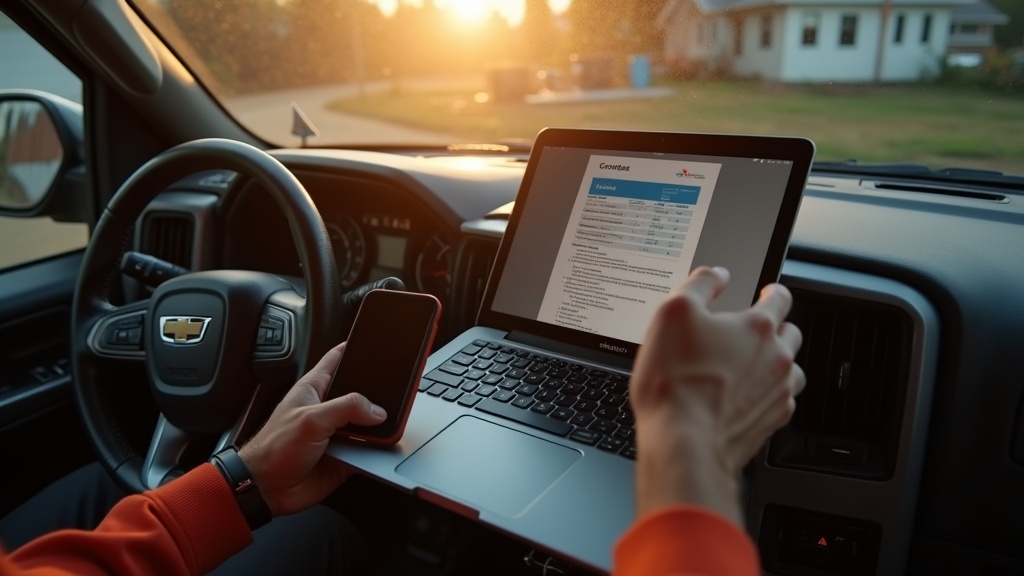
You sent the quote on Tuesday. By Wednesday afternoon, it's already starting to die.
Not because the price was wrong. Not because the homeowner went with someone else. Because nothing happened. The estimate sat in their inbox while they got distracted by a soccer practice, a work deadline, three other quotes they were also considering, and the general avalanche of decisions that any kitchen remodel or roof replacement triggers.
By Friday, your quote isn't even in their conscious mind anymore. By Monday, the contractor who texted them Wednesday at 2pm is already scheduling the start date.
This is what we mean when we say a quote went cold. It didn't get rejected. It got forgotten. And the math on forgotten quotes is brutal: industry data shows 78% of jobs go to the first contractor who follows up, not the cheapest, not the highest-rated, the fastest. Meanwhile 51% of contractors take 2+ hours to follow up on any given quote, and most of them never follow up a second time at all.
That gap, between sent and second-touch, is where the money is leaking. This post is about what's actually happening in those four days, why it happens, and the specific 5-minute cadence that closes the gap without you ever having to remember to do it.
What's Actually Happening Between Tuesday and Friday
Let's slow down what looks like a single beat, "the quote went cold", and watch it happen day by day.
Tuesday, 10:14 AM. You finish the estimate at the homeowner's kitchen table. You email it to her on the spot. She opens it on her phone, says "great, I'll talk it over with my husband," and you leave.
Tuesday, 10:30 AM. She forwards it to her husband. Husband says "looks good, let me think about it." Quote goes into a mental "to discuss" pile.
Tuesday, 4:00 PM. Soccer practice. Husband's mom calls. Dishwasher starts leaking. The quote is now buried under five new things.
Wednesday morning. She glances at her email. There are three quotes in there now, yours plus two others she requested last week. She doesn't have the bandwidth to compare three estimates before her 9 AM call. She defers.
Wednesday, 2:14 PM. One of the other contractors texts her: "Hey Jenny, just checking in on the kitchen estimate, happy to walk through anything." That single text does two things. It puts that contractor's name back at the top of her mind. And it signals he's professional and responsive, which she'll subconsciously project onto the entire project. Will he be this responsive when there's a problem mid-build? Probably.
Wednesday, 8:00 PM. She texts her husband: "I think I'm going with Mark. He's been the easiest to talk to."
Thursday morning. Mark gets the booking. You don't know yet.
Thursday, 7:00 PM. You're back at home, finally sit down with your phone, and remember you meant to follow up with Jenny on Tuesday. Two days late. You text her. She replies kindly: "Thanks so much, we actually decided to go with someone else. Appreciate the estimate!"
You didn't lose the job on price. You didn't lose it on skill. You lost it because you were on a roof when the homeowner needed a second touch, and someone else wasn't.
Why Contractors Don't Follow Up (Even When They Know They Should)
Every contractor reading this has been on both sides of this story. You know the chase matters. You've watched quotes die. So why does it keep happening?
It's not laziness. It's geometry. The follow-up has to happen during the homeowner's decision window, generally 24 to 96 hours after the quote, which is the exact same window when you're on a job, climbing a ladder, running material to a site, and turning your phone off so you don't fall off a roof.
The only window when you have time to follow up is after 7 PM, after dinner, when your spouse wants to actually see your face. And that's the window when the homeowner is least receptive, they're winding down, putting kids to bed, not in decision mode.
This is the trap. The chase has to happen during business hours. You're not available during business hours. So either you become the chaser AND the closer AND the guy on the roof, and burn yourself out doing all three, or the chase doesn't happen and you watch quotes go cold all summer.
There's a third option, and it's the only one that actually works at scale.
We Chase. You Build.
QuoteFollow is one product with one job: chase the signature on every quote you send. The cadence runs automatically, email, SMS, and reminders go out at the moments most likely to land, and you don't have to remember anything. You stay on the roof. The chase runs on its own.
Two lanes, hard split:
- We chase. Automated email day 2. Automated SMS day 5. Reminder day 9. Graceful close day 14. Each message comes from your number and uses the homeowner's name and project. The moment they reply, book the job, ask a question, or say they went with someone else, the entire sequence stops. They never get message 3 if they responded to message 2.
- You build. You finish the estimate. You walk out of the kitchen. You drive to the next job. You do the trade you actually got into the business for. The chase is no longer your problem.
That's the whole product. Not 47 modules. Not a 9-week onboarding. Two automated cadences (one for quote chase, one for payment chase after the job is done) and a flat $79/mo bill.
The 5-Minute Cadence That Closes Most Cold Quotes
Here is the specific cadence we recommend out of the box for quote chase. It's tuned from contractor close-rate data and works for residential trades, roofing, painting, remodeling, HVAC, plumbing, electrical. Tuning it takes 5 minutes once and then it runs forever.
Touch 1, Tuesday, 10:30 AM (same-day confirmation)
Sent automatically within an hour of the quote being delivered. Format: SMS. Length: one sentence.
"Hi Jenny, confirming you got the estimate for the kitchen remodel. Let me know if you have questions, happy to walk through anything., Sam"
This single text recovers 15, 20% of "lost" quotes by itself. It does two things: confirms the quote arrived, and beats the other contractors to the second touch. Most contractors skip this because it feels unnecessary. It is the highest-impact follow-up you can send.
Touch 2, Thursday morning (the value-add)
Day 2, 3 is when homeowners start comparing quotes. This is your shot to stand out, not by lowering the price, but by adding context.
Format: email. Content: a quick scope recap (so they don't have to dig back into the estimate PDF), one or two recent project photos (so they see real work), and a one-line on availability ("we have a slot opening for the second week of June"). No pressure, just substance.
This recovers another 10, 15% of cold quotes.
Touch 3, Day 7 (the check-in)
Format: SMS. One line. The goal is to reopen the conversation, not to push.
"Hey Jenny, hope you're well. Wanted to check in on the kitchen project. Any questions I can answer?"
If they're still on the fence, this is where they often surface their real objection. ("Husband wants to look at one more contractor." "Got hit with a car repair, may push to fall.") That objection is something you can actually respond to. Without the check-in, you'd never have heard it.
Touch 4, Day 12 (the schedule signal)
Format: SMS. Honest, no pressure.
"Jenny, quick heads up our schedule for July is filling up. If you're still considering the kitchen, want to make sure we can fit you in. Either way, no pressure."
This isn't manufactured scarcity. It's just the truth, most contractors actually do book out 6, 8 weeks ahead. Sharing that fact gives the homeowner a reason to make the decision rather than defer it for the fifth time.
Touch 5, Day 16 (the graceful close)
Format: SMS or email. Short. Honest.
"Hi Jenny, last note from me on the kitchen estimate. If you've gone in a different direction, totally understand, happy to be a resource if anything changes., Sam"
This message recovers 8, 12% of "dead" quotes. The homeowner's first-choice contractor flaked. The project got delayed but they're ready now. They just hadn't gotten around to responding. The graceful close lands at exactly the right moment for a real chunk of the silence pile.
What This Looks Like in the App
Inside QuoteFollow, the cadence is one screen. You set it up once. Five minutes. From that point forward, every quote you send triggers the sequence.
The cadence ledger shows the chase actually working through to signed:
- Quote sent → Tuesday 10:14 AM ✓
- Confirmation SMS sent → Tuesday 10:30 AM ✓
- Value-add email sent → Thursday 9:00 AM ✓
- Check-in SMS sent → next Tuesday 10:00 AM ✓
- SIGNED ✓, $30,000
You stay on the roof. The chase runs on its own. The signed line at the bottom is the only thing you really need to see.
What "We Chase" Doesn't Mean
A few things automation isn't, since this is the question every contractor asks:
It's not impersonal. Messages come from your phone number. They use the homeowner's name and project specifics. They sound like you wrote them, because the templates are yours. The homeowner can't tell the difference between a manually sent text and an automated one using the same words.
It's not pushy. Five touches over 16 days is the textbook professional cadence. Pushy is three calls in one day. The unprofessional thing is silence, and most contractors are accidentally silent.
It's not for big businesses only. It's actually the opposite. Large companies have office staff to handle this. A 3-person crew doesn't. Automation is the equalizer that gives a small operation the same follow-up consistency as a 50-person shop with a full sales department.
It's not a CRM. QuoteFollow is the anti-CRM. We don't run your business. We don't track every contact and every interaction. We do exactly two things, chase the signature, chase the payment, and we say so. There are no 47 modules to learn and no 9-week onboarding. Sign up, set the cadence, get back to work.
The Real Cost of Cold Quotes
A roofer sends 25 quotes a month. Average job: $9,500. Industry-typical close rate: 22%. That's about 5, 6 jobs a month, $52K of revenue.
Add the cadence above. Same crew, same prices, same neighborhoods. Close rate climbs to 35, 40%, which is what contractors with active follow-up cadences actually run. That's 9, 10 jobs a month. $85,500, $95,000 of revenue.
The difference: roughly $33,000 a month in recovered revenue from quotes that were already in the pipeline. Annualized: $400,000.
That money was already there. It was sitting in the inboxes of homeowners who genuinely would have hired you if you'd been the second name they thought of. The only thing standing between you and that revenue was the chase that didn't happen because you were on a roof.
Get Started in 5 Minutes
QuoteFollow is built to plug into how you already work. No CRM migration. No training calls. No setup fee.
- Sign up at quotefollow.co, 2 minutes.
- Pick the default 5-touch cadence above (or write your own messages), 3 minutes.
- Connect your quoting workflow.
- Turn it on.
Every quote from that point forward gets automatic follow-ups. You focus on the trade. The pipeline takes care of itself.
$79/mo flat. Unlimited users. SMS bundled. 14-day free trial, no demo call required.
We chase. You build. Get back on the roof, we'll chase the money.
FAQ
How is this different from Jobber, Housecall Pro, or ServiceTitan?
QuoteFollow is the anti-CRM. The big platforms try to run your whole business, invoicing, scheduling, dispatch, payments, reporting, marketing, and they price per-seat. A 15-person team is a $1,000+/month problem. QuoteFollow does two things, chase the signature, chase the payment, at $79/mo flat with unlimited users. If your follow-up problem is the bottleneck, the focused tool will close the gap faster than the all-in-one platform.
Will the homeowner know it's automated?
No. The messages come from your phone number, use the homeowner's first name, reference their specific project, and read like you wrote them, because the templates are yours. Most contractors using QuoteFollow get replies that thank them for "personally following up."
What if I want to write each follow-up myself?
You can. The system supports manual mode where it just reminds you to send the touch and you compose it on the spot. Most contractors start in manual mode for the first week, see the cadence working, and switch to automated by week two.
Does the chase keep going if the homeowner replies?
No. The moment they reply, by SMS or email, the entire sequence stops. They never get message 3 if they answered message 2. You're notified of the reply in the app and can take it from there.
How fast will I see results?
Most contractors see their first recovered quote within the first week of the trial. The full impact builds over 30, 60 days as your active pipeline fills with quotes being chased automatically. The 14-day trial is enough to prove the cadence works on your own quote pipeline.
Can I cancel any time?
Yes. Month-to-month. Cancel any time from inside the app, no calls, no retention departments, no "annual contract" trap. Per-seat fees and 9-week onboarding are not how we built this.
Stop losing jobs to silence.
QuoteFollow handles every follow-up automatically, so you close more jobs without lifting a finger.
Start your 14-day trial